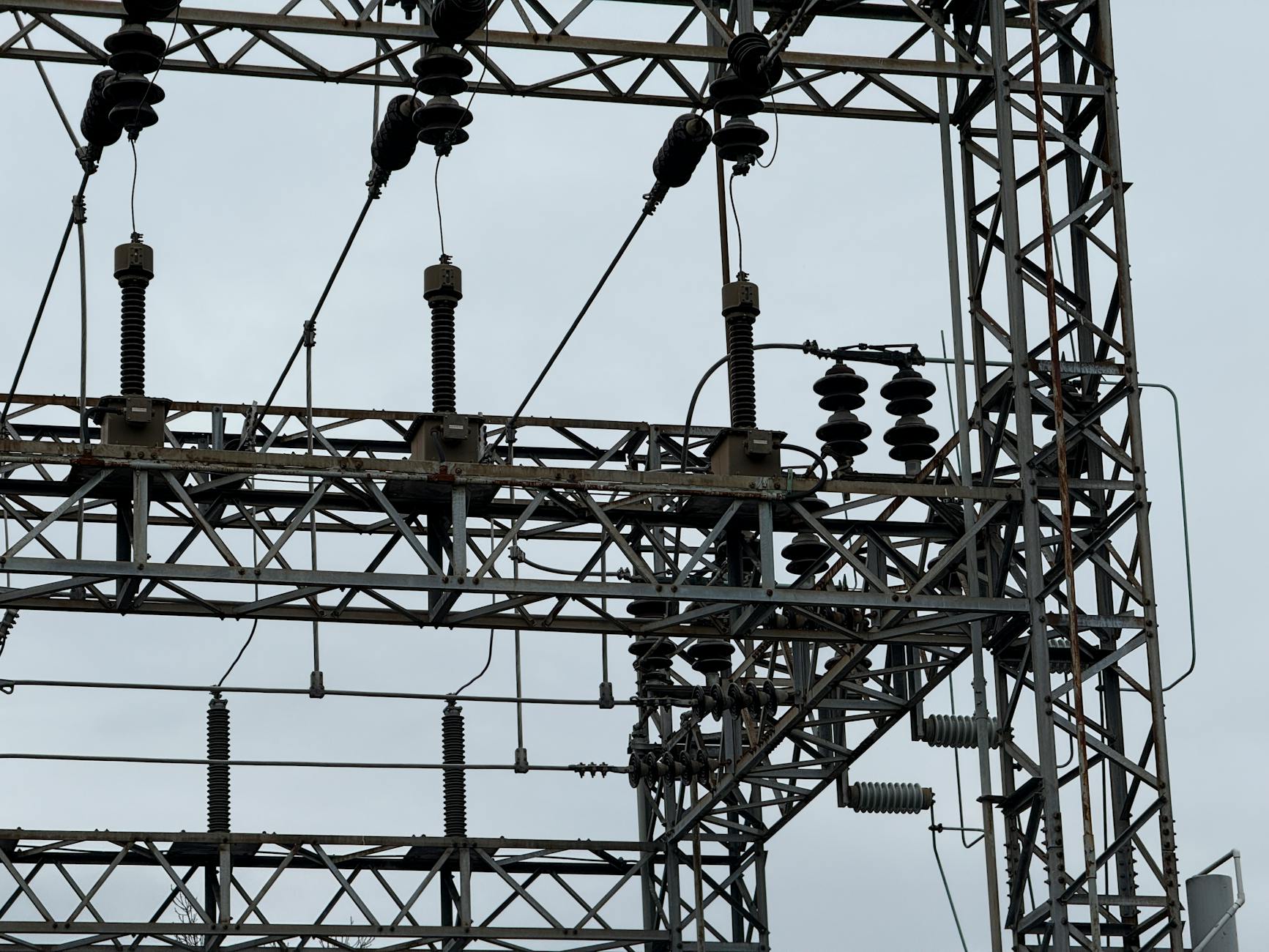
If you run a commercial or industrial operation in South Africa, somewhere between 30% and 40% of your electricity bill isn't paying for the electricity you actually use. It's paying for demand — the maximum rate at which your business draws power at any point during the billing period.
This is the demand charge, measured in kilovolt-amperes (kVA), and it is consistently the most misunderstood component on a South African commercial electricity bill.
What Is a Demand Charge?
Your electricity bill has two main components. The energy charge covers the total kilowatt-hours (kWh) you consume over the month — think of this as how much fuel you burned. The demand charge covers the peak capacity you required at any point — think of this as how big an engine you needed.
Municipalities and Eskom measure your demand in kVA (kilovolt-amperes) using a maximum demand meter. The meter records your highest average demand over any 30-minute period during the billing cycle. That single peak — even if it only lasted 30 minutes — sets your demand charge for the entire month.
This means a factory that runs steady at 200 kVA all month pays the same demand charge as one that hit 200 kVA for half an hour on day one and ran at 100 kVA for the rest of the month.
Why Demand Charges Are So Significant
On a standard commercial tariff, the demand charge rate can range from R150 to R400+ per kVA per month, depending on your municipality and tariff category. For a business with a measured maximum demand of 500 kVA, that's between R75,000 and R200,000 per month — just for the demand component.
On time-of-use (TOU) tariffs, the picture gets more complex. Demand charges may differ between peak, standard, and off-peak periods, and between high season (June to August) and low season. A demand spike during a winter peak period costs significantly more than the same spike at 2am in February.
Where Demand Charge Errors Occur
Demand charges are fertile ground for billing errors because the calculations depend on accurate meter data, correct CT (current transformer) ratios, and proper tariff application. Here's where things commonly go wrong:
1. Incorrect CT Ratios
Current transformers step down the actual current flowing through your supply cables so the meter can measure it. The billing system then multiplies the meter reading by the CT ratio to calculate actual demand. If the CT ratio is captured incorrectly in the billing system — say 200:5 instead of 100:5 — your demand readings are doubled. Every month.
2. Estimated Demand Readings
When actual meter readings aren't obtained, municipalities estimate demand. Unlike energy estimates (which tend to average out over time), demand estimates often default to your contracted notified maximum demand (NMD) or a historical peak. If your actual demand has dropped — due to efficiency improvements, reduced production, or load management — the estimate won't reflect that.
3. Wrong Tariff Category
Different tariff categories apply different demand charge rates. A business on a standard tariff pays a flat demand rate. A business on a TOU tariff pays differentiated rates by time period and season. If your business was migrated to the wrong tariff category, or if a tariff revision wasn't applied correctly, your demand charges could be calculated at the wrong rate entirely.
4. Notified Maximum Demand (NMD) Penalties
Most commercial supply agreements include a notified maximum demand — the capacity you've contracted for. If your actual demand exceeds your NMD, penalty rates apply (often 2x to 3x the standard demand rate). But if your NMD was set too low years ago and was never updated, you could be paying penalties regularly for demand that should be within your contracted allocation.
How to Read Your Demand Charges
On your municipality electricity account, look for line items labelled "Demand," "Maximum Demand," "kVA," or "Network Demand." Note the measured kVA value and the rate applied. Compare this to your municipality's published tariff schedule for the current financial year.
Key questions to ask:
Is the kVA reading actual or estimated? What CT ratio is the billing system using? Does the demand rate match your tariff category? Have you exceeded your NMD, and if so, is the penalty rate correct? Has your actual demand changed significantly since your NMD was last set?
If you can't answer these questions from looking at your bill, you're not alone. Most businesses can't — and that's exactly how demand charge errors persist undetected.
Take the First Step
Understanding your demand charges is the foundation of managing your electricity costs. If you suspect your demand charges are higher than they should be — or you simply don't know — start with a benchmark.
The OptiRate Electricity Rate Calculator analyses your consumption and demand profile against available tariff structures to show you what you should be paying. It takes 60 seconds and costs nothing. If there's a gap between what you're paying and what you should be, you'll know immediately.
Gallery